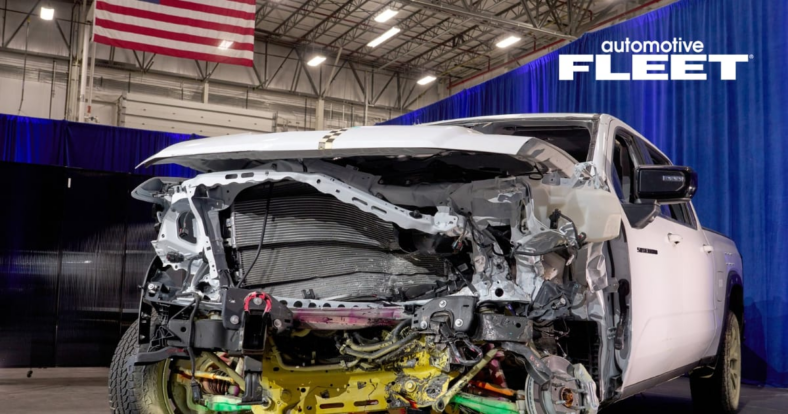
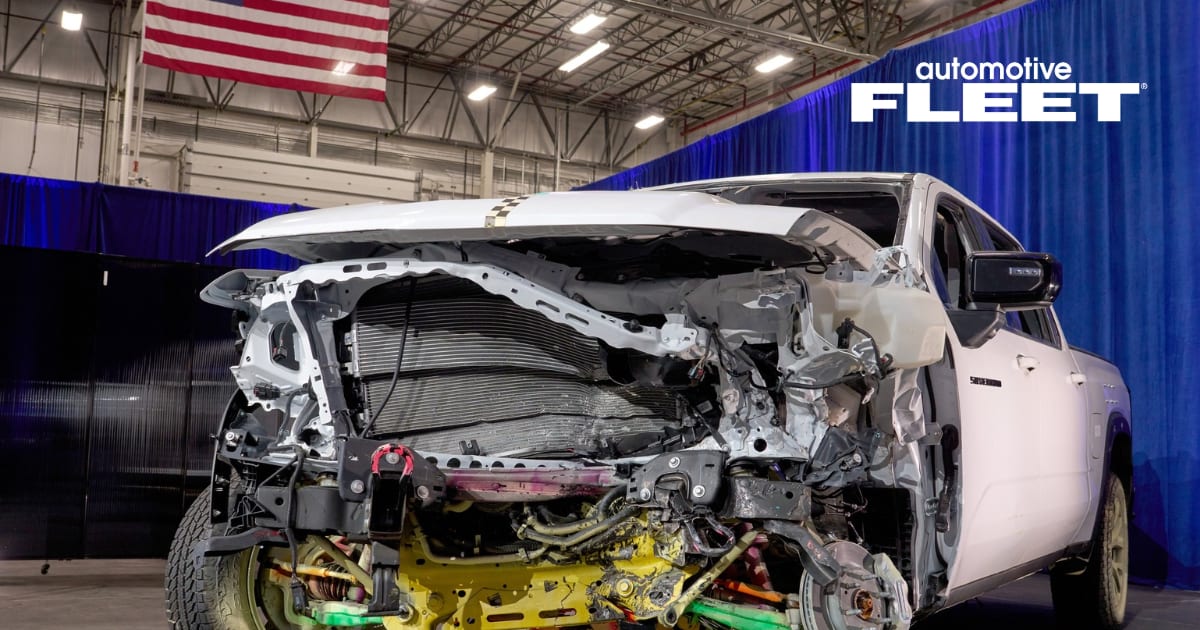
General Motors used computer simulations to evaluate crash scenarios, occupant protection and vehicle design variations before conducting physical crash tests.
General Motors conducted approximately 92,000 virtual crash tests during development of the 2027 Chevrolet Silverado 1500, using computer simulations to evaluate vehicle safety before physical testing.
According to GM, approximately 80% of the truck’s passive safety engineering work was completed virtually, generating nearly 2 petabytes of data.
The approach allows engineers to examine how vehicle structures and occupant protection systems respond to different crash scenarios, including variations in occupant size, seating position and vehicle components.
“GM is using math-based virtual engineering to run thousands of simulated crashes before physical properties exist,” said Regina Carto, GM vice president of Global Product Safety, Systems and Certification. “Engineers can evaluate a much broader range of conditions—including different crash modes, occupant sizes, and seating positions. They can examine design details, identify issues earlier and iterate in weeks rather than months.”
How Virtual Crash Testing Works
GM uses computer-aided design (CAD), computer-aided engineering (CAE) and simulation technology to evaluate vehicle safety during development.
Unlike physical crash tests, which require test vehicles and specialized facilities, virtual simulations allow engineers to evaluate multiple design configurations before building physical prototypes.
For the 2027 Silverado 1500, GM’s Global Safety Product Integration (GSPI) team used simulations to study how changes in vehicle materials, component thickness and structural connections could affect crash performance.
Engineers also examined variations in manufacturing processes and vehicle components to better understand how these factors could influence occupant protection.
According to GM, this process allows engineers to identify potential design issues earlier and evaluate a broader range of crash conditions than would be practical through physical testing alone.
Physical Crash Tests Validate Simulations
Although much of the Silverado’s safety engineering was conducted virtually, GM also performed multiple physical crash tests throughout development.
One test involved a 40% frontal overlap collision at 40 mph, in which the driver’s side of the vehicle struck a barrier across 40% of the truck’s width.
The test included a crash-test dummy representing a 50th-percentile male in the driver’s seat and a 5th-percentile female in the second row.
Before conducting the physical test, engineers evaluated hundreds of variations involving the vehicle’s structure and passenger restraint systems.
These simulations helped inform the truck’s design and provided data for comparison with physical crash-test results.
“Virtual engineering makes our physical testing more targeted, more efficient, and more informative,” Carto said. “Virtual models help us explore more possibilities and refine the design; physical tests then confirm those results and help us improve the models.”
GM said results from physical testing are also used to refine its virtual models for future evaluations.
AI Supports Vehicle Safety Development
GM is also incorporating artificial intelligence into its vehicle development processes to help engineers analyze large volumes of simulation data.
The company said AI currently assists engineers with processing data and debugging models, with additional applications planned for repetitive engineering tasks.
For the 2027 Silverado 1500, virtual safety engineering generated nearly 2 petabytes of data, equivalent to approximately 2.1 million gigabytes.
GM expects AI-assisted analysis to help engineers evaluate more design variations and make development decisions more quickly.
The company has previously outlined a goal of reducing vehicle development timelines from the current industry standard of four to five years by expanding its use of AI and virtual engineering.
What This Means for Fleet Vehicle Safety
For fleet managers evaluating pickup trucks, the development process provides insight into how automakers are using simulation technology to assess occupant protection across a range of crash conditions.
Virtual testing allows manufacturers to study different occupant sizes, seating positions and vehicle configurations before conducting physical tests.
However, the number of simulations performed does not independently establish a vehicle’s crashworthiness or predict its performance in standardized safety evaluations.
Physical crash testing and independent safety ratings remain important considerations when assessing vehicles for fleet use.
GM said its virtual and physical testing processes are intended to complement one another, with simulations informing vehicle design and physical tests helping validate engineering models.
Related: What Fleet Managers Learned from IIHS Crash Testing