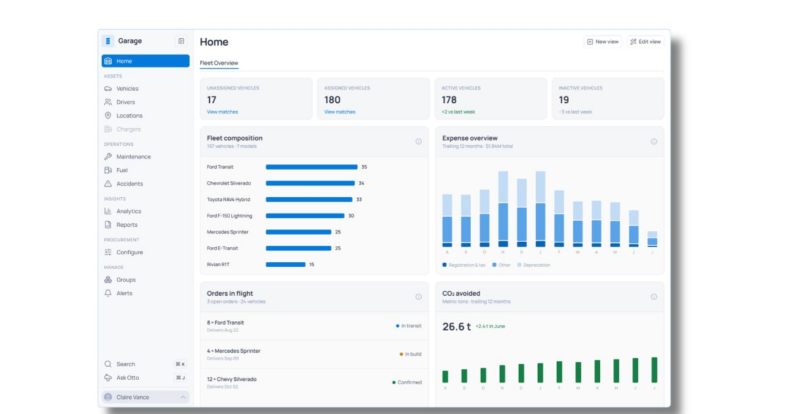
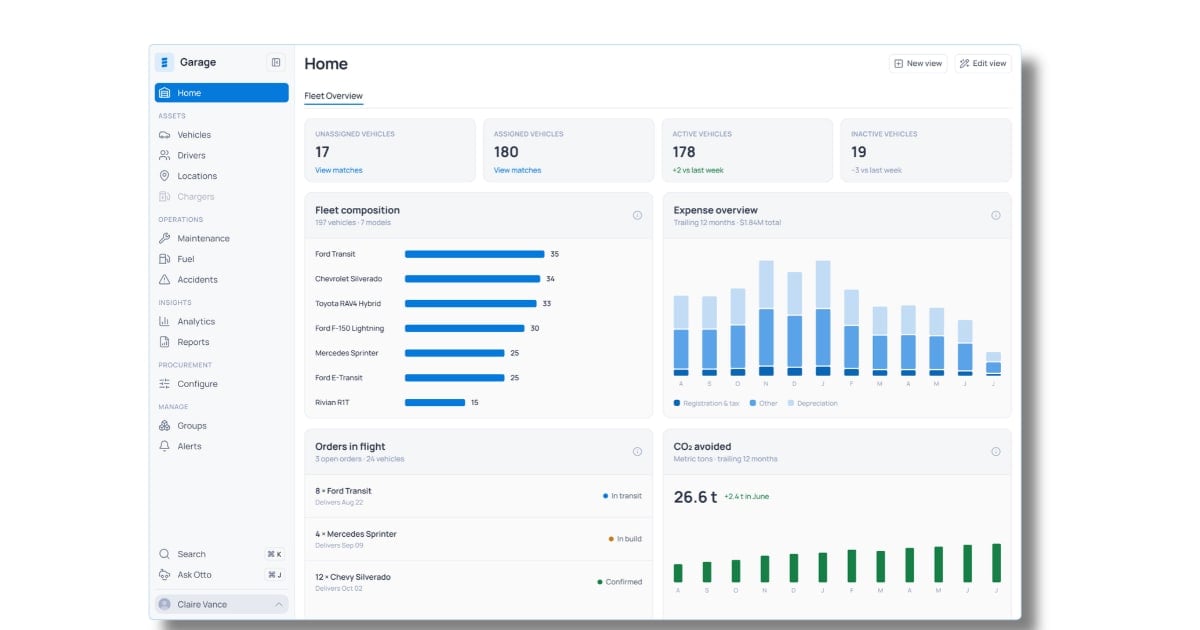
Inspiration Fleet has introduced Garage 2.0, an AI-based fleet intelligence platform that consolidates data from multiple fleet systems into a single environment.
The platform is designed to ingest and normalize data from different sources, including vehicle, telematics, fuel, energy, and operational systems. Fleet managers can then access that information through real-time KPIs and role-based dashboards.
“With more data available than ever before, fleet operators don’t have a data availability problem; they have a fragmentation problem,” said Chris Getner, chief technology officer at Inspiration Fleet.
Connecting Data Across Fleet Operations
Garage 2.0 can also integrate fleet information with enterprise systems outside the traditional fleet department, including finance, sustainability, and facilities.
That capability is intended to allow fleet data to flow into broader organizational decision-making rather than remaining within individual fleet or vendor platforms.
The system is designed to support fleets operating multiple powertrain technologies, including internal combustion engine, hybrid-electric, and battery-electric vehicles. Inspiration Fleet said the platform can also incorporate data associated with non-vehicle assets, services, technology vendors, and EV charging infrastructure.
One of the platform’s central features is a vendor-agnostic architecture. Rather than requiring fleets to use a predetermined group of technology providers, Inspiration Fleet said Garage 2.0 lets customers select vendors and switch providers without migrating the entire fleet management platform.
That could be especially relevant as fleets add new technologies or replace individual systems without rebuilding the connections between their fleet data and the rest of the organization.
“Every fleet is unique,” said Josh Green, CEO of Inspiration Fleet. “With Garage 2.0, each customer’s fleet management platform is finally customized to their needs.”
The company said the platform is designed to create a customized fleet management ecosystem around each customer’s combination of vehicles, vendors, systems, and operational requirements.